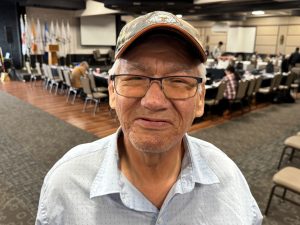


Mushkegowuk Council Grand Chief Leo Friday says the introduction of Ontario’s proposed Bill 140 comes at a time when First Nations across Treaty 9 are seeking greater certainty that economic development will proceed in a manner that respects Treaty rights, protects traditional land uses, and maintains meaningful consultation.
At a hearing held at Queen’s Park on Tuesday, the Grand Chief provided a written statement to the Standing Committee on the Interior in which he outlined concerns about the proposed legislation and offered several recommendations to mitigate its potential impacts.
The province introduced Bill 140, the Building Ontario Faster Act, 2026, with the stated objective of accelerating infrastructure, resource development, transportation projects, and economic growth across Ontario.
“We understand the importance of roads, energy infrastructure, critical minerals, mining investment, and economic opportunities,” the Grand Chief stated in his written presentation. “Our concerns are not about whether development happens. Our concerns are about how development happens.”
He said, “When environmental review processes are shortened or modified, there is a risk that cumulative effects on watersheds, wetlands, and traditional territories will not be adequately understood.
“A mine affects wildlife movement. Transmission corridors affect harvesting areas. Multiple developments can produce impacts that are far greater than the sum of their individual effects.
“We believe cumulative effects assessment must remain a central component of any development approval process.”
To address his concerns to the Standing Committee, the Grand Chief offered five recommendations:
• Establish a permanent Treaty 9 Indigenous-Government Development Table composed of First Nations leadership, provincial representatives, federal representatives, and industry participants to review major regional development initiatives before approval decisions are finalized;
• Require cumulative-effects assessments for all major projects affecting Treaty 9 territory, including mining, transportation, energy, and infrastructure developments;
• Provide dedicated funding that allows First Nations to conduct independent technical reviews, environmental studies, and traditional land-use assessments. Participation is meaningful only when communities have the resources necessary to fully evaluate proposals;
• Ensure that Indigenous Protected and Conserved Areas, traditional land-use plans, and regional conservation initiatives are considered at the earliest stages of project planning; and
• Guarantee long-term economic participation through revenue-sharing agreements, procurement commitments, skills development programs, and Indigenous equity opportunities in major infrastructure and resource developments. Communities should not merely host projects. They should benefit from them for generations.
The Grand Chief said while Ontario is focused on investing in fast-tracking industry within our territory, “I worry about the well-being of our community members. I worry about the operation and maintenance of our infrastructure and roads, the water supply, sewer system, drainage, dumping, and the high cost of groceries and goods, especially gas fuel and heating. These are necessities I would like to see both the Ontario and federal governments invest in.”